Residential Wireman License in Texas: How to Get It and Keep It
A residential wireman license is the Texas Department of Licensing and Regulation (TDLR) credential for electricians who focus on homes. TDLR defines the residential wireman as licensed only to perform electrical installations in single-family and multifamily dwellings not exceeding four stories. For many electricians it is a quicker route to a TDLR license than the journeyman path, because it requires half the on-the-job training hours. This guide covers every step to earn a residential wireman license in Texas: the training, the application, the exam, the costs, and the yearly renewal that follows. Each requirement comes from TDLR’s own pages, linked throughout.
Get the $20 CE Course Visit TX Electrician CE
Quick Answer: To get a residential wireman license in Texas, a candidate needs either proof of an approved career and technology education (CTE) program or 4,000 hours of on-the-job training under a Texas-licensed master electrician or residential wireman. The application is filed by mail with a $20 non-refundable fee. After TDLR approves it, the candidate passes the PSI exam with a score of 70% or better. The license is valid for one year and renews annually with 4 hours of TDLR-approved continuing education and a $20 renewal fee.
What a Residential Wireman License Allows
TDLR states that, with certain exemptions, anyone who performs electrical work in Texas must be licensed. Electrical work includes any labor or material used to install, maintain or extend an electrical wiring system and related equipment, plus service entrance conductors as defined by the National Electrical Code (TDLR: Apply for a New Residential Wireman License).
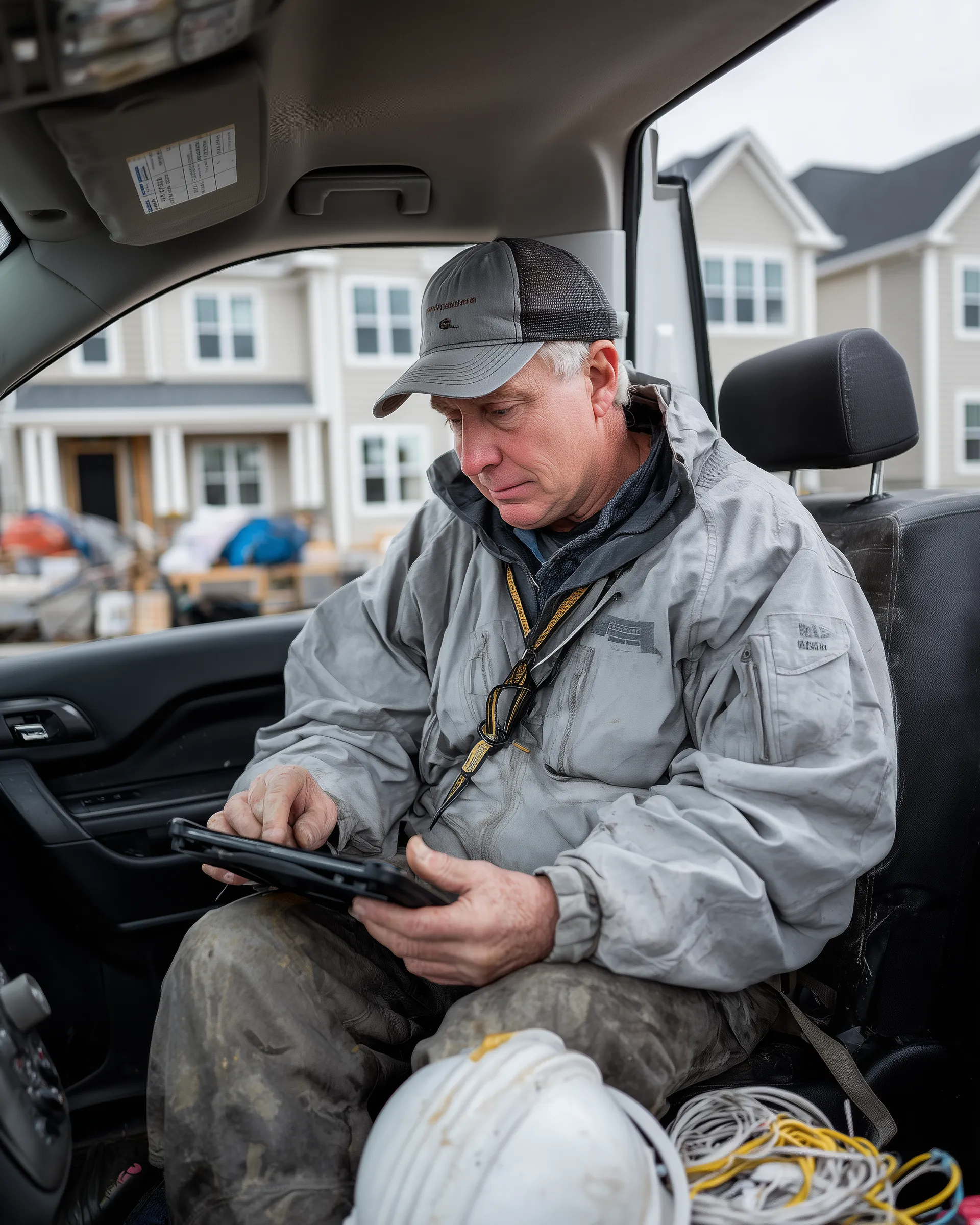
The residential wireman license narrows that scope to housing. A licensed residential wireman can work on single-family homes and on multifamily buildings of up to four stories. Work on other building types, such as commercial or industrial projects, falls outside what the license allows. That makes the residential wireman a strong fit for electricians who already spend their days in new home construction, remodels, and apartment projects.
The training difference is significant. TDLR requires 8,000 hours of on-the-job training for a journeyman electrician license, compared with 4,000 hours for the residential wireman route. For an electrician who plans to stay in residential work, that gap can mean holding a state license much sooner. Candidates who want commercial work later should compare both paths in TDLR’s requirements before choosing.
Licensing starts on day one. TDLR’s FAQ says new hires must hold a license before performing electrical work, and there is no grace period to work while waiting. Electricians earning on-the-job hours therefore need a license while they work, and our guide to becoming an electrician apprentice in Texas covers that registration. For a side-by-side look at every license type, see our Texas electrical license requirements breakdown.
Residential Wireman License Requirements at a Glance
| Requirement | What TDLR requires |
|---|---|
| Scope | Single-family and multifamily dwellings not exceeding four stories |
| Training | Approved CTE program, or 4,000 hours on the job under a Texas master electrician or residential wireman |
| Experience proof | Experience Verification Form signed by each supervisor |
| Application | By mail, $20 non-refundable fee |
| Exam | PSI, open book, 70% to pass |
| Deadline | One year from the date TDLR receives the application |
| License term | One year; renew annually |
| Renewal | 4 hours of CE + $20 renewal fee |
How to Get a Residential Wireman License: 5 Steps
Step 1: Choose a training path
TDLR accepts two routes. The first is proof of completion of an approved career and technology education program. The second is 4,000 hours of on-the-job training under the supervision of a Texas-licensed master electrician or residential wireman. TDLR’s FAQ adds two points about the CTE route: CTE graduates must still take and pass the residential wireman exam, and hours spent in a CTE program cannot be credited toward the on-the-job training required for any other electrician license.
Step 2: Document the experience
Candidates using the on-the-job route must contact each master electrician or residential wireman who supervised them. Each supervisor completes and signs a separate Experience Verification Form. If a former supervisor is hard to reach, TDLR suggests contacting the electrical contractor the supervisor worked under, or using the TDLR license search to find contact details. TDLR may contact individuals to verify the experience, so accurate records of job sites and supervisors matter.
Step 3: Mail the application with the $20 fee
The initial application must be submitted by mail. The candidate sends the completed residential wireman application form (TDLR form ELC-LIC-013) with the $20 non-refundable application fee to TDLR, PO Box 12157, Austin, TX 78711-2157. Anyone with a felony or non-traffic misdemeanor conviction, or a deferred adjudication, must include a Criminal History Questionnaire. TDLR reviews convictions case by case, and a review can take one to six weeks.
Step 4: Pass the residential wireman exam
After TDLR receives and verifies the application, it notifies the candidate by email or regular mail that they are approved to test. The section below covers the exam in detail.
Step 5: Meet every requirement within one year
TDLR gives applicants one year from the date it receives the application to satisfy all requirements, including passing the exam. The testing provider sends results to TDLR electronically, so candidates do not need to mail them in.

The Texas Residential Wireman Exam: What to Expect
TDLR offers electrician exams through its third-party vendor, PSI. Key facts from TDLR’s electrician exam information page:
- Locations: PSI test centers across Texas, including Austin, Dallas, Fort Worth, Houston, San Antonio, El Paso, Lubbock, McAllen and Amarillo.
- Scheduling: Through PSI’s website or at (833) 333-4741. The candidate’s name must match TDLR’s records exactly.
- Open book: Candidates may bring a soft-bound National Electrical Code. TDLR’s page currently references the 2026 Edition. Loose-leaf, spiral-bound and ring-bound copies are not allowed.
- Passing score: 70% or better. The exam can be retaken as many times as needed, though additional exam fees may apply.
- Language: The residential wireman exam is offered in English and Spanish.
- Fees and format: The exam fee, number of questions and time limit appear in PSI’s Candidate Information Bulletin.
- Missed exams: Missing an exam or arriving late forfeits the exam fee.
The residential wireman exam is not easy. TDLR’s Fiscal Year 2025 statistics show 331 passes out of 1,098 residential wireman exams, a pass rate of 30.15%. That number is the best argument for serious preparation. A good plan is to read the Candidate Information Bulletin first, tab the NEC articles most used in dwelling work, and take several timed residential wireman practice test sessions before booking a date. A Texas residential wireman practice exam built around the current NEC helps candidates learn to find answers in the code book quickly, which matters on an open-book test with a time limit.
Keeping Your Residential Wireman License Active
Earning the license is only half the job. TDLR states that a residential wireman license is valid for one year from the date of issuance and must be renewed annually. Licensees should receive a reminder email or postcard about 60 days before expiration, but renewing on time is the licensee’s responsibility (TDLR: Renew a Residential Wireman License).
4 hours of continuing education every year
Residential wiremen are on TDLR’s list of licensees who must complete 4 hours of continuing education before each renewal (TDLR: Electrician Continuing Education). The coursework must address:
- The National Electrical Code
- Texas Electrician Law (Occupations Code, Chapter 1305)
- Texas Electrician Administrative Rules (16 TAC Chapter 73)
- Electrical safety under NFPA 70E
Courses must come from a TDLR-registered provider and be completed within the term of the license being renewed. One hour equals 50 minutes of instruction, partial completions do not count, and the same course cannot be repeated for credit. The provider reports completed hours to TDLR, and licensees must keep their completion certificates for one year. Electricians who hold more than one license type need only 4 total hours. Our Texas electrical continuing education breakdown explains each topic in more detail.
Renewal and late fees
The on-time renewal fee for a residential wireman license is $20, paid through TDLR’s online renewal. Late renewal costs more:
| Time expired | Renewal fee | How |
|---|---|---|
| 90 days or less | $30 | Online |
| 91 days to 18 months | $40 | Online |
| Over 18 months, under 3 years | $40 | By mail, with the first 2 pages of the application and a Request to Executive Director for Expired License Renewal Form |
| Over 3 years | Cannot renew | Re-apply as a new applicant |
TDLR also waives renewal fees, though not late fees, for a licensed residential wireman, journeyman or master electrician who documents at least one academic semester of teaching in a department-approved CTE program.
Common Mistakes to Avoid
Working without a license. TDLR allows no grace period for unlicensed electrical work.
Losing track of supervisors. Every supervisor must sign a verification form, so record names and license numbers as you go.
Taking jobs outside the scope. A residential wireman license covers dwellings up to four stories, not other building types.
Bringing the wrong code book. Spiral-bound or loose-leaf NEC copies are turned away.
Taking CE outside the license term. Hours must fall within the term being renewed.
Frequently Asked Questions
How many hours do you need for a residential wireman license in Texas?
TDLR requires 4,000 hours of on-the-job training under a Texas-licensed master electrician or residential wireman, or proof of an approved career and technology education program.
How much does a residential wireman license cost?
The application fee is $20 and non-refundable. Exam fees are set in PSI’s Candidate Information Bulletin. Renewal is $20 per year, plus the cost of 4 CE hours.
Do CTE graduates still take the residential wireman exam?
Yes. TDLR requires every applicant to pass the exam, even after completing an approved CTE program.
Is the Texas residential wireman exam open book?
Yes. Candidates may bring a soft-bound copy of the National Electrical Code. A score of 70% or better is required to pass.
What can a residential wireman work on?
Electrical installations in single-family and multifamily dwellings not exceeding four stories.
How often does a residential wireman license renew?
Every year. Each renewal requires 4 hours of TDLR-approved CE and the $20 renewal fee.
Can I renew if my license expired more than three years ago?
No. TDLR requires re-applying as a new applicant.
Finish Your Residential Wireman CE in One Sitting
Once you hold your residential wireman license, staying current takes 4 approved hours each year. TX Electrician CE (TDLR Provider #2512, Course #32560) offers the full 4-hour online course for $20, covering the NEC, Texas law and rules, and NFPA 70E safety. Your certificate is ready when you finish, and we file your completion with TDLR within one business day.
Enroll in the $20 CE Course Visit TX Electrician CE